Industrial Wiring: Best Practices for Safety
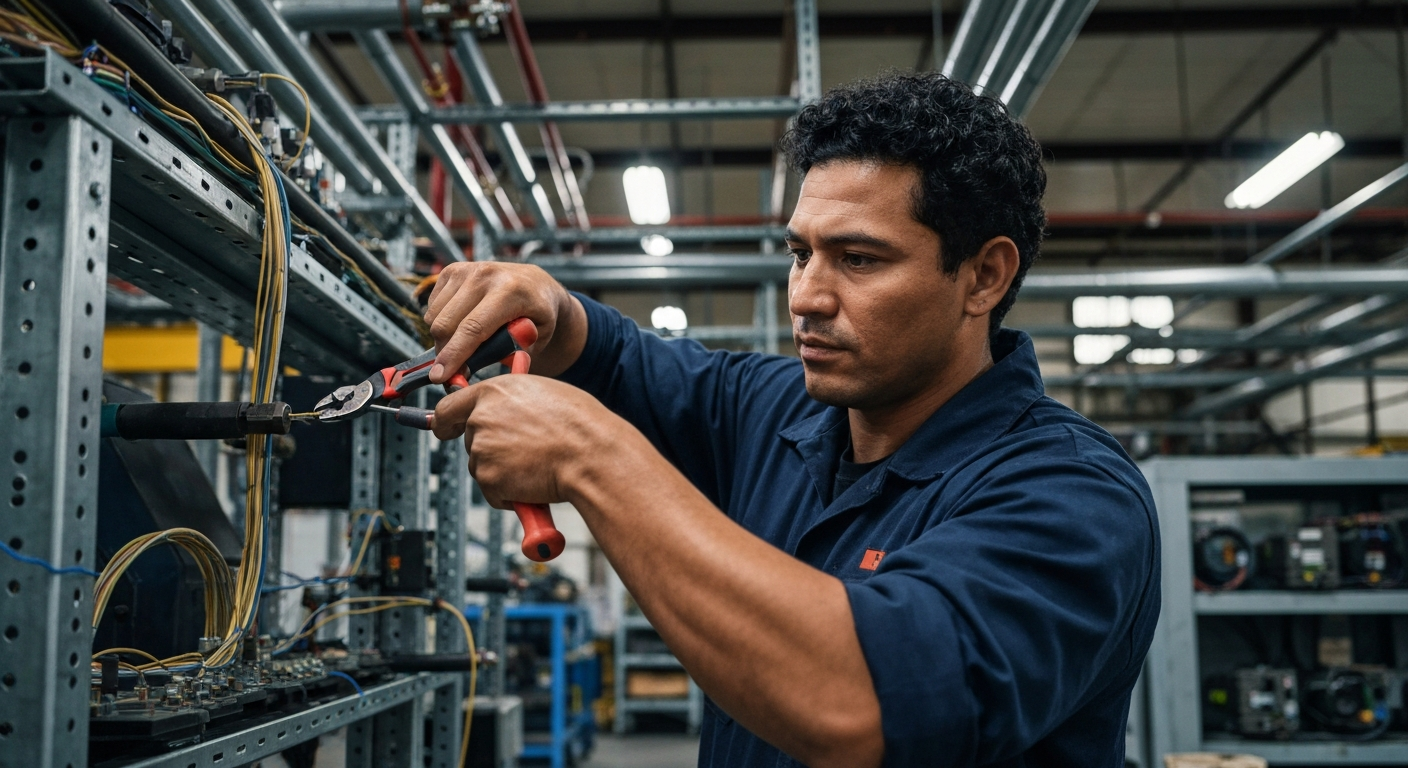
Industrial environments demand a higher standard of electrical safety. Higher voltages, heavy machinery, and continuous operation mean that wiring mistakes can have serious consequences — from equipment damage to life-threatening injury. Following established best practices is non-negotiable.
Proper conduit selection and installation is the foundation. In industrial settings, rigid metal conduit (RMC) or intermediate metal conduit (IMC) protects wiring from physical damage, moisture, and chemical exposure. Every run should be properly supported, grounded, and labeled so future technicians can trace circuits safely.
Grounding and bonding are critical. A robust grounding system protects both people and equipment from fault currents and lightning. Bonding ensures all conductive surfaces are at the same potential, preventing dangerous voltage differences. Industrial facilities should have their grounding systems tested regularly.
Arc flash safety deserves special attention. Energized work should be minimized, and when it's necessary, proper PPE and documented procedures are required. Labeling equipment with arc flash boundaries and incident energy levels helps every worker understand the risk. A qualified electrician can perform an arc flash analysis and label your equipment to keep your team safe and compliant.